

 Facebook
 X
 Pinterest
 Copy Link
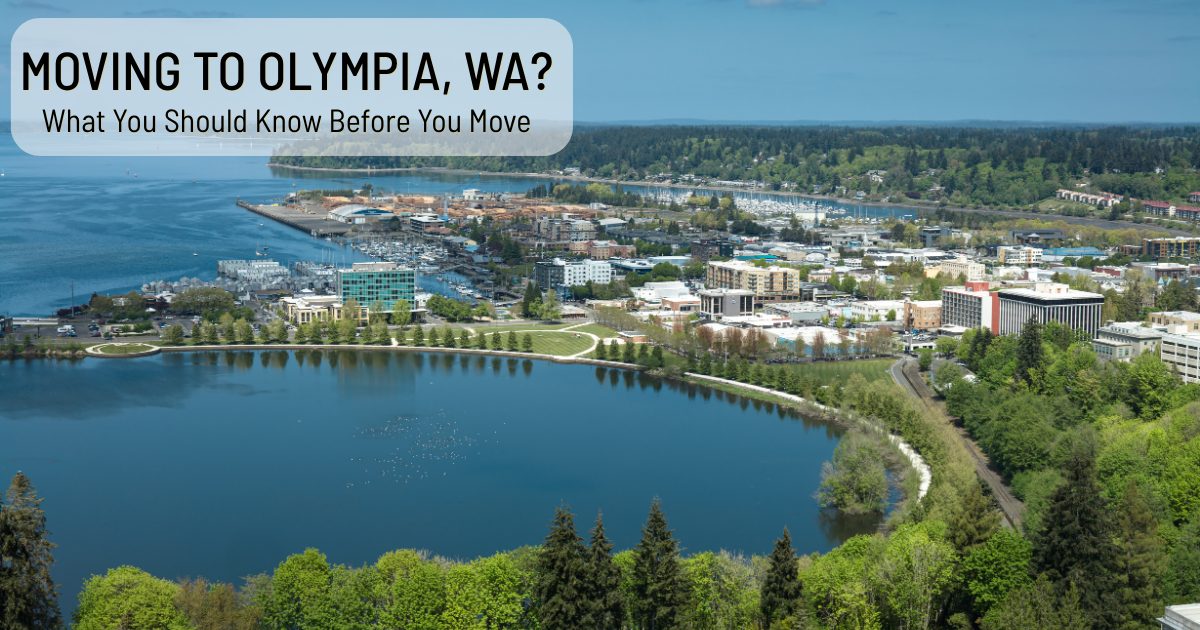
Thinking about moving to Olympia, WA? You’re probably wondering what it’s actually like to live here—not just what you’ll find in a relocation brochure.
Olympia offers an unusual combination: a smaller city at the southern end of Puget Sound with easy access to mountains, forests, water and larger cities. But choosing where to live in the Olympia area involves more than picking a neighborhood from a list.
Is Olympia a good place to live?
For the right person, absolutely.
I’ve lived in the Olympia area for years and work throughout Western Washington as a real estate broker. Here’s what I’d want someone to know before deciding whether Olympia should be their next home.
Olympia Makes a Pretty Great Home Base
One of Olympia’s biggest advantages isn’t necessarily what’s in Olympia. It’s everything within reach of it.
Head east and you’re toward the Cascades. Head west and you’re on your way to the Olympic Peninsula and Pacific Coast. Puget Sound, lakes, hiking, camping, skiing and boating are all close enough to realistically become part of your life instead of places you visit once every few years.
When you want a larger city, Tacoma and Seattle are north on I-5. Portland is close enough for a weekend trip without needing to get on an airplane.
That’s something I think gets overlooked when people compare Olympia with larger cities.
You don’t necessarily move here because Olympia itself has everything.
You move here because it makes a pretty damn good home base for everything around it.
“Olympia” Is Bigger Than Olympia
People relocating from outside the area often search for homes in “Olympia” when what they really mean is the greater Olympia, Lacey and Tumwater area—and sometimes considerably beyond it.
That’s an important distinction.
Within a relatively small area, you can find established neighborhoods, newer developments, condos and townhomes, waterfront properties, homes on acreage, rural properties, custom homes, higher-end homes and properties with substantial shops or outbuildings.
Drive a little farther outside the cities and the property itself can become as important as the house.
That’s why I usually encourage relocating buyers to start with how they want to live, rather than immediately choosing a city or neighborhood.
Do you want restaurants and services nearby?
Do you need to commute north toward JBLM or Tacoma?
Would you rather have acreage and privacy?
Do you want waterfront?
Do you need room for an RV, boat, shop or other toys?
Those answers can completely change where it makes sense to start looking.
How Expensive Is It to Live in Olympia?
This is another question people frequently ask before moving to Olympia, and there’s no single number that answers it particularly well.
The U.S. Census Bureau reports the median value of owner-occupied housing in Olympia at approximately $486,000 for its 2020–2024 reporting period.
But that’s useful for context—not for deciding what *your* house will cost.
Real estate around Olympia varies considerably based on location, lot size, age, condition and property type.
A conventional home in town is a different market from five acres outside the city. Waterfront is different again. So is a custom home with a shop, a rural property on well and septic, or a higher-end home with views and privacy.
If you’re relocating here, I’d worry less about finding the “average Olympia house” and more about identifying what you actually need and understanding what that type of property costs in the areas where you’re willing to live.
If You Commute North, Don’t Just Look at the Mileage
If you’re moving to Olympia but working north toward Joint Base Lewis-McChord, Tacoma or Seattle, commute planning matters.
I-5 is the primary north-south corridor through the area, and the experience of driving it can vary substantially depending on where you’re going and when you’re traveling.
That’s particularly important for military families and people relocating here for jobs farther north.
Before buying a house, think about the commute as part of the property—not something you’ll figure out afterward.
And if that commute is going to be part of your everyday life, test it during the hours you’ll actually be driving it.
The house that looks perfect on a map may feel considerably different after you’ve driven the route on a weekday.
Yes, We Should Talk About the Weather
If you’re moving from somewhere sunny, understand what you’re signing up for.
Western Washington has a reputation for rain, but for many newcomers the bigger adjustment isn’t dramatic rainstorms.
It’s the gray.
Fall and winter can mean short days, clouds, drizzle and wet ground for extended stretches.
The payoff is obvious when you look around. Western Washington stays incredibly green, and summers around Olympia can be spectacular.
If waking up to sunshine most mornings is essential to your happiness, you should seriously consider that before moving here.
If forests, mountains, water, greenery and relatively moderate temperatures are worth enduring some gray months, the trade starts making considerably more sense.
Going Rural? The House Is Only Part of What You’re Buying
You don’t have to travel particularly far outside Olympia before wells and septic systems, private roads and larger parcels become common.
None of those things should automatically scare a buyer away.
They simply require more homework.
If you’re considering acreage or a rural property, you’ll want to understand the well and septic system, maintenance history, access, drainage and any limitations the property may create for future plans.
Thurston County has specific requirements governing septic systems, including inspection and maintenance requirements for certain systems.
Private roads and shared driveways can also come with maintenance agreements and responsibilities that deserve attention before closing.
These aren’t particularly exciting when you’re scrolling through listing photos.
They become considerably more interesting when you own them.
This is one reason I look at rural and distinctive properties differently from a conventional house in town.
You’re buying the land, systems, access and limitations along with the house.
Waterfront Deserves Its Own Conversation
Living near Puget Sound is one of the things that makes this area special, and waterfront property around Olympia and South Puget Sound can be incredible.
It can also introduce another layer of due diligence.
Depending on the property, bulkheads, docks, shoreline regulations, flood exposure, erosion, septic systems, tidelands and access rights may all deserve investigation.
Two waterfront homes that look remarkably similar online can represent very different ownership experiences.
If waterfront is part of your reason for moving to Western Washington, don’t treat the water as simply another feature on the listing sheet.
That’s a subject worthy of its own article.
Olympia, Lacey or Tumwater?
This is probably going to become another article too, because it’s one of the first distinctions relocating buyers should understand.
These cities sit next to each other, and it’s entirely possible to cross from one into another during your normal day without giving it much thought.
But when you’re deciding where to buy, don’t assume they’re interchangeable simply because they’re geographically close.
Instead of asking which city is “best,” I’d look at practical considerations: the type of property you want, commute, access to the places you use regularly, lot size, utilities and what you want immediately around you.
That’s a much more useful way to narrow a search than somebody else’s ranking of the “best places to live.”
So, Is Olympia a Good Place to Live?
For me, yes.
There are a few reasons I’ve stuck around.
Olympia gives you access to a pretty ridiculous amount of what makes the Pacific Northwest special without requiring you to live in Seattle or another major city.
You can live closer to downtown and have restaurants and services nearby. You can move farther out and find acreage and privacy. You can own a conventional neighborhood home, something on the water, a custom property with a shop, or somewhere your nearest neighbor isn’t particularly near at all.
But the right version of Olympia depends heavily on why you’re moving here and what you want your everyday life to look like.
That’s the question I’d answer before worrying about which neighborhood has the prettiest houses online.
Thinking About Moving to Olympia?
If you’re considering relocating to Olympia, Lacey, Tumwater or somewhere else in Western Washington, you don’t need to have everything figured out before talking with a real estate broker.
In fact, sometimes it’s better if you don’t.
Tell me what you want your life here to look like. Tell me where you need to get to regularly, what you need from the property, what would be nice to have, and what you absolutely don’t want.
We can work backward from there.
And ask the weirdly specific questions.
Those are usually the useful ones.
Nate Wright
Real Estate Broker
CENTURY 21 Van Dorm Realty
Olympia, Washington


